Compressed air plays a critical role in underground mining operations, powering production equipment, rock-drills, pneumatic tools, refuge chambers, sensors, and supporting ventilation in specific applications. Underground conditions present severe operating challenges including dust, heat, restricted airflow, long pipe runs, and continuous air supply demand. Establishing the correct compressed air system is essential for safety, reliability, and energy-efficient operation in WA underground mines.
The Unique Ventilation & Air-Supply Challenges Underground
Underground environments present conditions that directly affect compressed air performance:
- Elevated ambient temperatures increase compressor thermal loads
- Moisture and humidity encourage water accumulation in lines
- Dust and particulate matter impact filtration efficiency
- Restricted airflow limits heat dissipation
- Long distances between surface compressors and underground tools create pressure loss
- Narrow drifts and shaft layouts complicate pipe routing
These factors contribute to efficiency losses, fluctuating pressure at end-use points, and increased maintenance requirements. Ventilation air quality, dust suppression, and heat management are especially critical for HSE compliance and worker safety.
Designing the Right Compressed Air System for Underground Mines
A well-engineered system must be matched to underground operating conditions. Key considerations include:
- Selecting appropriate compressor types (diesel, electric, fixed-speed or VSD)
- Ensuring compressor is physically robust and portable enough to be safely moved, positioned, and relocated across hard, uneven surfaces
- Ensuring correct flow and pressure across extended pipework
- Minimising leaks and pressure losses in long piping networks
- Using appropriate filtration stages for dust-heavy environments
- Applying refrigerant or desiccant drying to control moisture
- Implementing condensate management and drainage
- Providing adequate cooling to avoid compressor thermal shutdown
- Protecting air intakes and ventilation in dusty atmospheres
- Integrating compressed air design with ventilation planning and emergency airflow requirements
Correctly sizing compressors reduces wasted energy and ensures stable air supply at critical touchpoints such as headings, refuge bays, drill points, and pumping stations.
Maintenance Strategies for Harsh Underground Conditions
Maintaining compressed air performance in underground mining requires proactive servicing:
- Frequent filter inspection and replacement
- Managing auto-drains and preventing water buildup in lines
- Regular PRV testing for safety compliance
- Inspecting pipework for leaks, corrosion, and mechanical fatigue
- Monitoring air quality and pressure via remote diagnostics
- Conducting scheduled compressor servicing aligned to operating hours
- Stocking critical spare parts onsite to reduce downtime
Pneumatic Engineering can support underground sites across WA with local technicians, rapid response capability, and on-site servicing to maintain system reliability.
Underground mining environments demand compressed air systems that are engineered for heat, humidity, dust exposure, and extended distribution distances. A robust system design combined with disciplined maintenance ensures stable airflow, pressure consistency, safety compliance, and reliable production output. Pneumatic Engineering provides system design, installation, upgrade planning, servicing, and support for underground operations across Western Australia, ensuring mining sites have a dependable, compliant compressed air supply.
Case Study: How Pneumatic Engineering’s Underground-Ready Compressor Solution Boosted Reliability for New Mine Site
Client: Mining contractor
Site: New underground gold mine
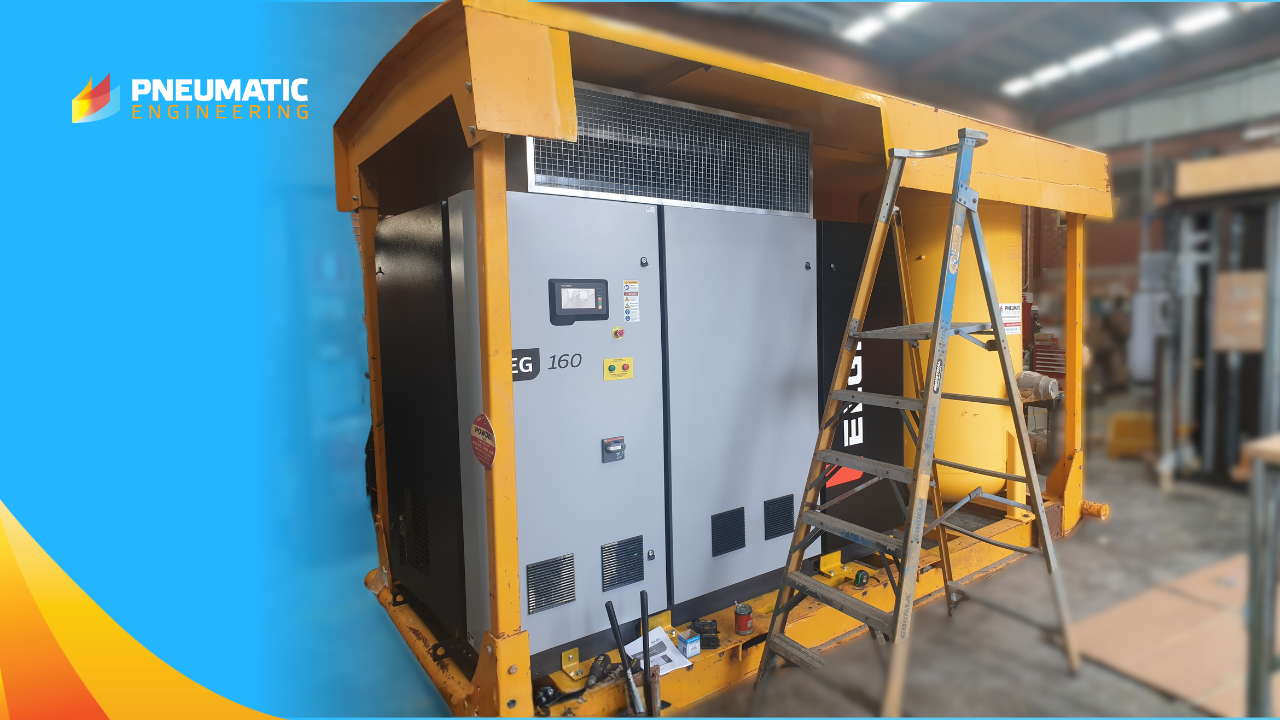
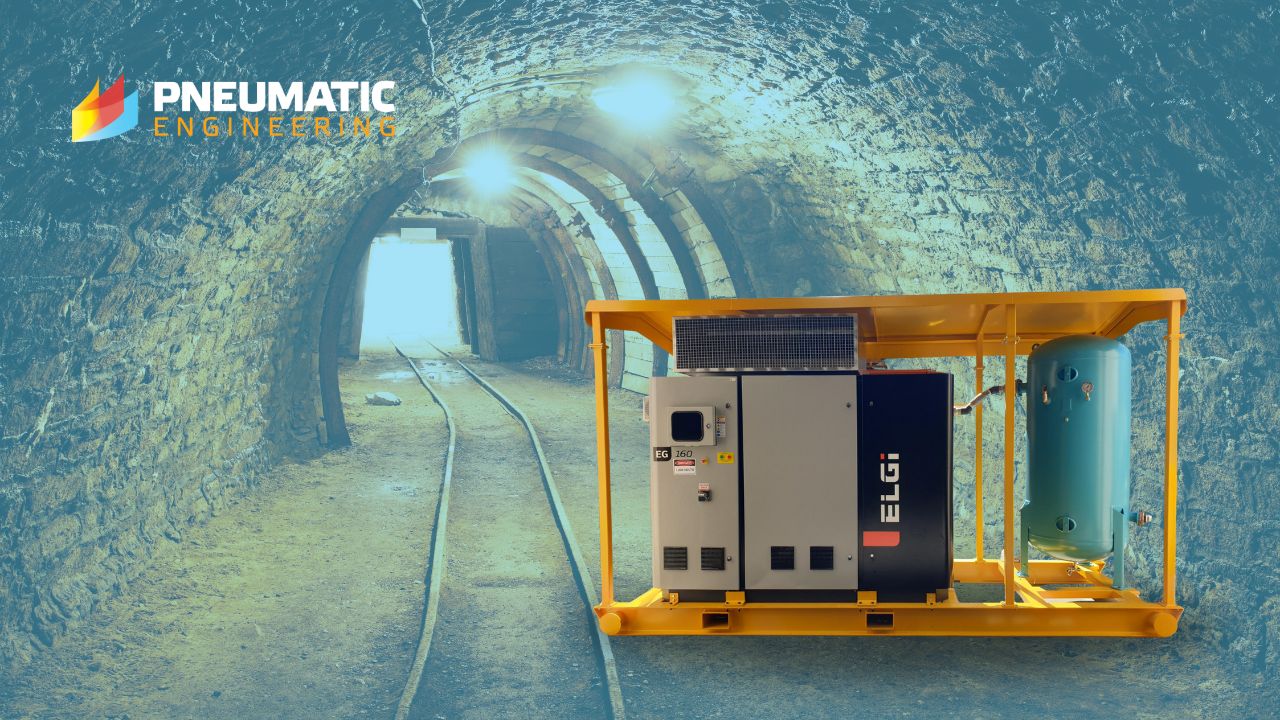
Equipment Supplied: ELGi EG160 (160kW, 1000 CFM) Screw Air Compressor
Challenge:
A mining contractor came to Pneumatic Engineering requiring a high-capacity air compressor suitable for underground mining operations with specific voltage requirements and rugged mobility features. The equipment needed to efficiently filter air underground while also being robust enough for frequent relocation within the mine.
Solution:
Pneumatic Engineering supplied a custom-built ELGi EG160 compressor, converted from 415V to 1000V to meet site power requirements. The compressor was mounted on a 2000-litre, all-bolted skid purpose-built for underground use. Designed for both lifting and dragging, the skid provided flexibility in tight underground environments.
To ensure optimal performance, the unit featured a high-efficiency cooling system:
- Hot air exhaust was engineered to expel heat effectively.
- Cool air intake was routed through vents and expelled upward, preventing recirculation and enhancing overall cooling efficiency—a key improvement over standard compressor designs.
Outcome:
The installation delivered reliable, high-performance compressed air, with effective underground air filtration and superior thermal efficiency. The custom skid and voltage conversion ensured seamless integration with the client’s operations from day one.
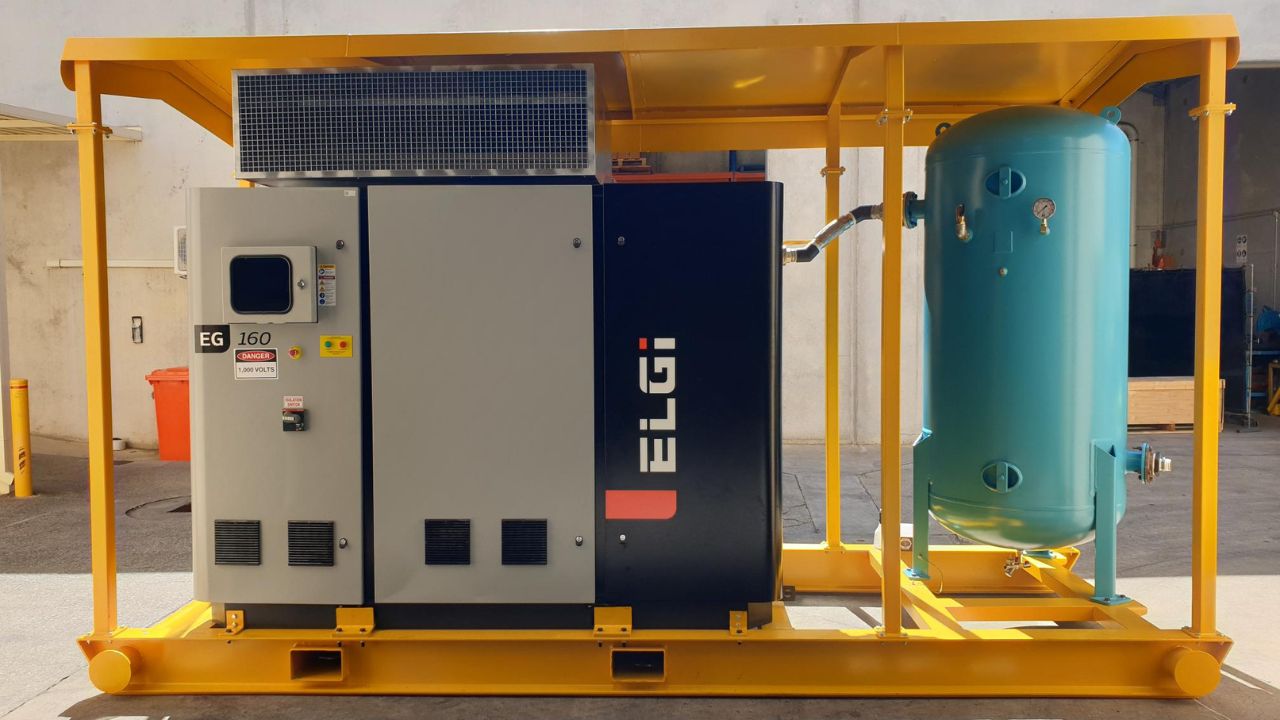
Custom skid-mounted ELGi EG160 for WA mining contractor